The 3Rs for Products and Packaging

Basic Approach
As the world shifts into a circular economy, companies exist as members of society expected to consider product life cycles that prevent waste generation and reduce environmental impact to the greatest extent possible.
The Nikon Environmental Policy discusses maximizing resource efficiency by optimizing raw material usage and extending product lifespan, etc., moving away from the use of virgin resources, and considering environmental friendliness throughout the product life cycle for the circular economy. Guided by this policy, the Nikon Group engages in the 3Rs (reduce, reuse, recycle) for products and packaging in the product development and design phases.
Related Policies

Strategy
Given our diverse range of products, the Nikon Group must base our strategies on the characteristics of each business. We organize the necessary measures to reduce, reuse, and recycle, and set appropriate targets for each business.
The 3R Initiatives of the Nikon Group
- Reduce
1. Promote materials with low environmental impact, make products smaller, and reduce the number of parts
2. Extend product lifespan
3. Reduce plastic packaging materials
4. Promote the switchover of containers and packaging from plastic to paper and bio-based plastic materials - Reuse
1. Pursue the reuse of products, parts, materials, and packaging
2. Expand sales of used products
3. Decide whether to continue the sale of used equipment - Recycle
1. Decide on the new adoption of recycled materials
2. Pursue the adoption of recycled materials (research, etc.)
3. Promote the switchover from plastic packaging and containers to recycled materials
Featured
Extending Product Life
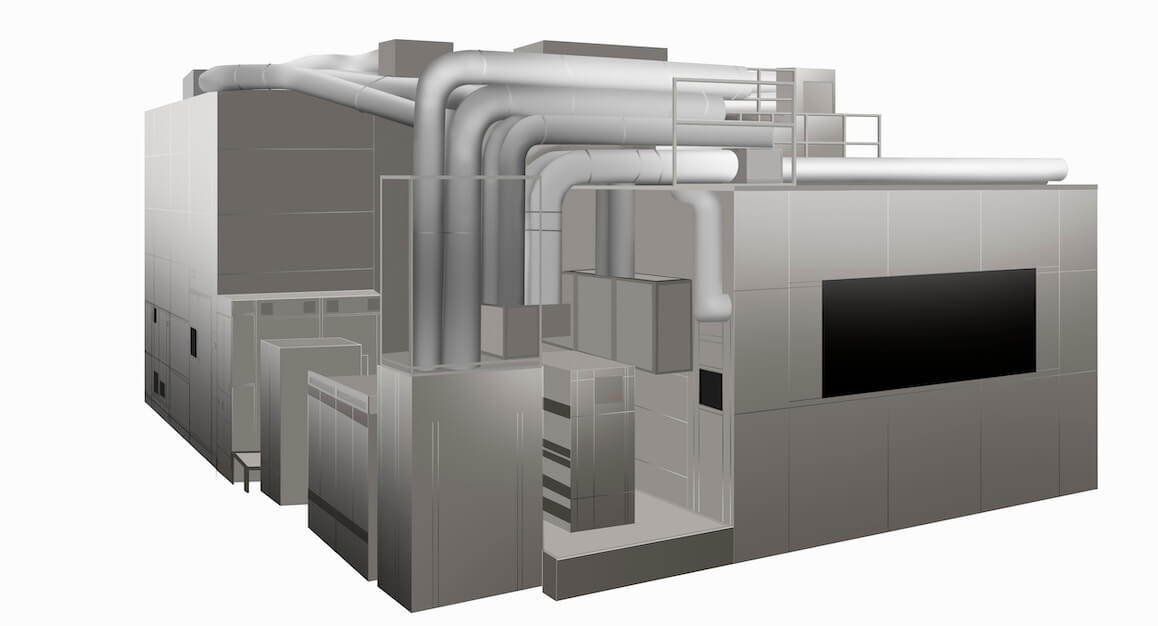
To extend product lives for our customers, Nikon offers our Plaza Inspection Pack and Periodic Maintenance inspection and cleaning services.
The Periodic Maintenance service is to inspect each part of the camera equipment and lenses, check accuracy, clean details, and perform other services in an environment fully equipped with inspection equipment and devices.
We also refresh and upgrade projection lenses for older FPD lithography systems to extend product lives for customers.
Furthermore, the FX-88SL FPD lithography system, for which we began accepting orders in 2025, is the first FPD lithography system to be equipped with a UV-LED light source. The longer life expectancy compared to conventional lamps allows the equipment to be used for a longer period of time.
Reducing Plastics in Packaging
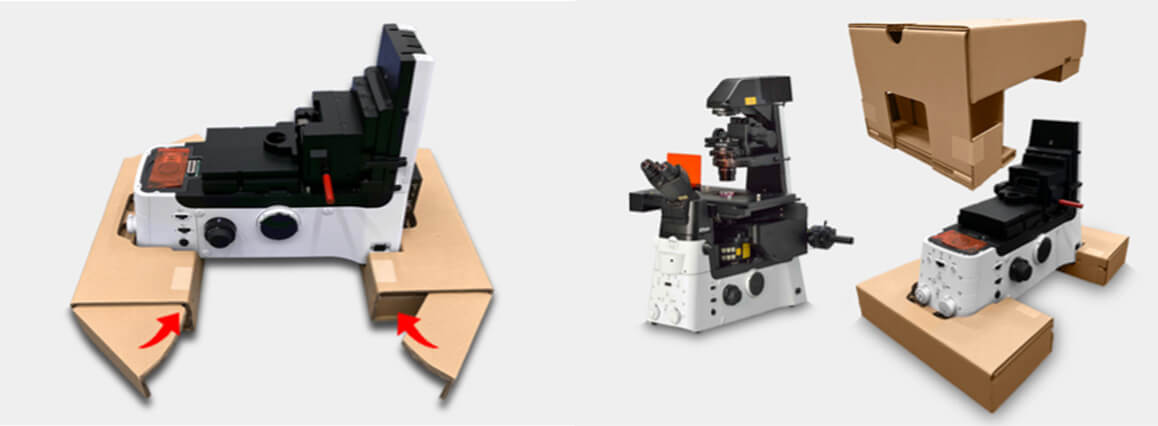
The Nikon Group pursues the reduction of disposable plastics used in product packaging, not only for imaging products, but also for industrial products, as a key topic, reducing the volume of disposable plastics, switching to paper-based materials, etc.
Our packaging for the ECLIPSE Ti2-E, biological microscope (for healthcare product) uses paper as a cushioning material, completely replacing the foam plastic used previously. We also developed packaging configurations capable of withstanding the specified drop and vibration tests, reducing the weight of packaging materials by 16% and eliminating metal fasteners.
These efforts were recognized for both environmental impact reduction and product quality, receiving the Technical Packaging Award at the 2025 Japan Packaging Contest of the Japan Packaging Institute. In addition, we received the WorldStar Award, the world's most prestigious award in the packaging field, at the WorldStar Contest 2026 hosted by the World Packaging Organisation (WPO).
Sustainability Report 2026
See the 3Rs for Products and Packaging section of our Sustainability Report for more information.

Sustainability Report 2026 Data Index
View data related to our environmental initiatives.
Related Information
Brand Movie「Environment」
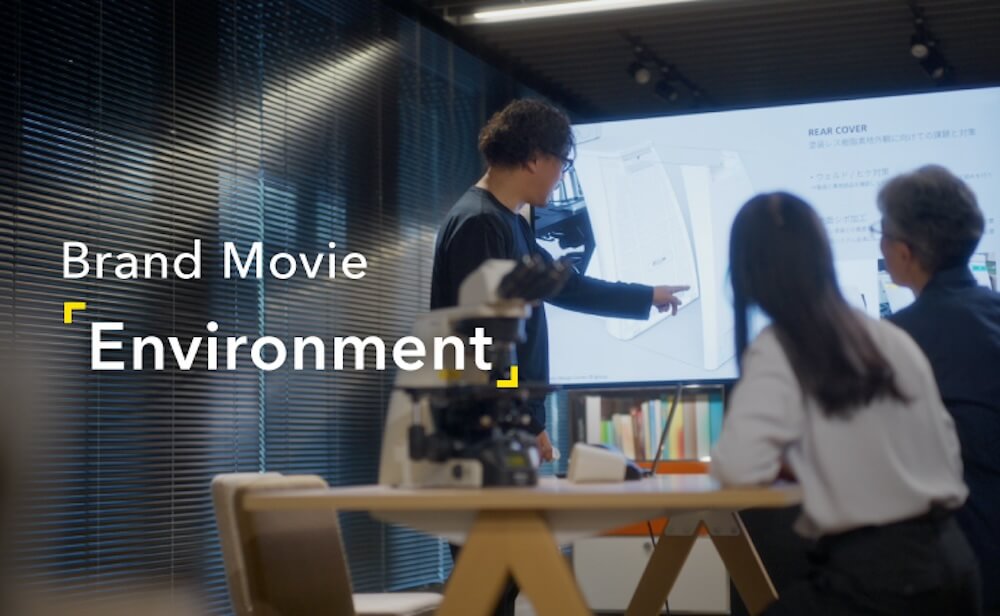
View our video highlighting Nikon's environmental initiatives here. (Runtime: 2:34. Our initiatives to Less Waste by Smarter Packaging starts at 01:30.)