
Environment

While climate change is a risk to our business, we also see a business opportunity to contribute to decarbonization and resource circulation by leveraging our core technologies.

The effects of climate change are becoming more pronounced, leading to increasingly severe social and economic losses and damages. The deliverable of the global stocktake, an assessment of global climate change action, reaffirmed the urgent need for action to achieve the 1.5℃ target. The document included emission reductions for all greenhouse gases across all sectors, including industry, transportation, and households, as well as contributions by field.
Simultaneously, there is a need to shift away from the traditional linear economy characterized by a cycle of mass production, consumption, and waste generation toward a circular economy in which resources are recycled and reused. In addition, with regard to chemical substances contained in products, there has been a steady expansion in the scope of substances that are subject to regulation, as well as in the geographical areas in which such regulations apply.
Companies will be asked to further their efforts to conduct information disclosures based the TNFD* framework and perform nature-related risk/opportunity assessments toward becoming Nature Positive by 2030, a movement to halt biodiversity loss and put nature on a recovery track.
The Nikon Long-Term Environmental Vision stipulates our three pillars of Realizing a Decarbonized Society, Realizing a Resource Circulating Society, and Realizing a Healthy and Environmentally Safe Society. Under this vision, the Nikon Group contributes to building a sustainable society by balancing environmental responsibility with business growth.

  • *TNFD: Abbreviation for Taskforce on Nature-related Financial Disclosures. The Task Force on Nature-Related Financial Disclosure established a framework for companies and organizations to assess and disclose the impact of economic activities on the natural environment and biodiversity.

Environmental Strategy

The Nikon Group established a Sustainability Policy, which aims to contribute to sustainable societies and achieve sustainable growth for the company. The Group has also operated under the Nikon Environmental Activity Policy, a specific policy regarding the environment, to date. In February 2025, we revised this policy into the Nikon Environmental Policy and further clarified the guidelines for our activities in response to the growing seriousness of environmental issues and heightened societal expectations for corporate initiatives.
Under these policies, we formulated the Nikon Long-Term Environmental Vision looking ahead to fiscal year 2050 as a means to address environmental risks and regulations proactively. The Nikon Long-Term Environmental Vision comprises three pillars believed to be particularly important in consideration of the global situation and the characteristics of Nikon’s business, which uses limited resources to manufacture and sell products. These three pillars are linked with Materiality and with the Nikon Medium-Term Environmental Goals, for which fiscal year 2030 is the target year. Our Environmental Action Plan is a single-year goal that we are rolling out across the Group. We clarify the relationship between the environment and our business activities and then make an accurate assessment of the impacts and risks posed to the environment, using this information to prioritize goals and plans.
The Environmental Subcommittee deliberates on and approves self-evaluation performances and we review our action plans for the next year and thereafter based on the issues that are identified by the Subcommittee.
The Nikon Group clarified the content of the resource circulation targets under the Nikon Medium-Term Environmental Goals in fiscal year 2024 to enable reliable progress management toward achieving those targets.

Nikon Long-Term Environmental Vision (Target Period: Fiscal Year 2050)

The Nikon Group contributes to building a sustainable society through the Nikon Long-Term Environmental Vision, established for Realizing a Decarbonized Society, Realizing a Resource Circulating Society, and Realizing a Healthy and Environmentally Safe Society.
The Nikon Group is committed to developing new businesses and tackling innovations that will contribute to reducing environmental impacts.

Sustainable Society/Realizing a Decarbonized Society:Achieving net zero* /Realizing a Healthy and Environmentally Safe Society/Realizing a Resource Circulating Society
  • *90% reduction of GHG emissions (Scope 1, 2, and 3) throughout the value chain, with the remaining emissions neutralized according to internationally recognized criteria.
Nikon Environmental Goal Relationship Diagram
Nikon Long-Term Environmental Vision (Target Year: Fiscal Year 2050)/Realizing a Decarbonized Society/Realizing a Resource Circulating Society/Realizing a Healthy and Environmentally 
Safe Society/→Nikon Medium-Term Environmental Goals (Target Year: Fiscal Year 2030)/→Environmental Action Plan (Single-Year Goal)/→To Department Goals and Specific Activities

Materiality

Pick Up

Improving Packaging to Reduce Environmental Impact

corrugated cardboard packaging

The Nikon Group is committed to achieving both product quality and environmental responsibility in its packaging initiatives.
Our biological microscopes had traditionally required plastic cushioning materials due to their weight and complex shapes. In light of advances in corrugated cardboard packaging technology, we redesigned the packaging by standardizing all materials to corrugated cardboard, thereby reducing environmental impact.

Under the new packaging specifications, drop tests and vibration tests were conducted to verify performance equivalent to that of the previous packaging design.
By converting to corrugated cardboard, we not only achieved zero use of plastic cushioning materials, but also realized significant reductions compared with our previous specifications: approximately 44% fewer components, a 16% reduction in total packaging weight, and a 24% reduction in packaging costs.

In addition, the elimination of metal staples used in carton assembly has reduced the burden of material sorting during unpacking, lowered the risk of injury during handling, and removed the need for material separation at disposal.

In recognition of these efforts, this initiative received the WorldStar Award at the “WorldStar 2026” international packaging competition organized by the World Packaging Organisation (WPO).

Promoting GHG Reductions with
Procurement Partners

The Nikon Group encourages major procurement partners to calculate and reduce GHGs.
In fiscal year 2024, we asked 100 of our major procurement partners to disclose information. A total of 90 companies provided greenhouse gas emissions and other climate change-related information. When making this request, we offered three briefing sessions for the procurement partners in question. We also offered individual guidance and time for question-and-answers on calculating GHG emissions as needed.
Throughout fiscal year 2025, we will continue to expand the number of targeted procurement partners to 150 companies to better understand partners' Scope 1, 2 and 3 emissions.

Major Activities in Fiscal Year 2024

Scope 1 and Scope 2 Greenhouse Gas Emissions (Compared to Fiscal Year 2022)
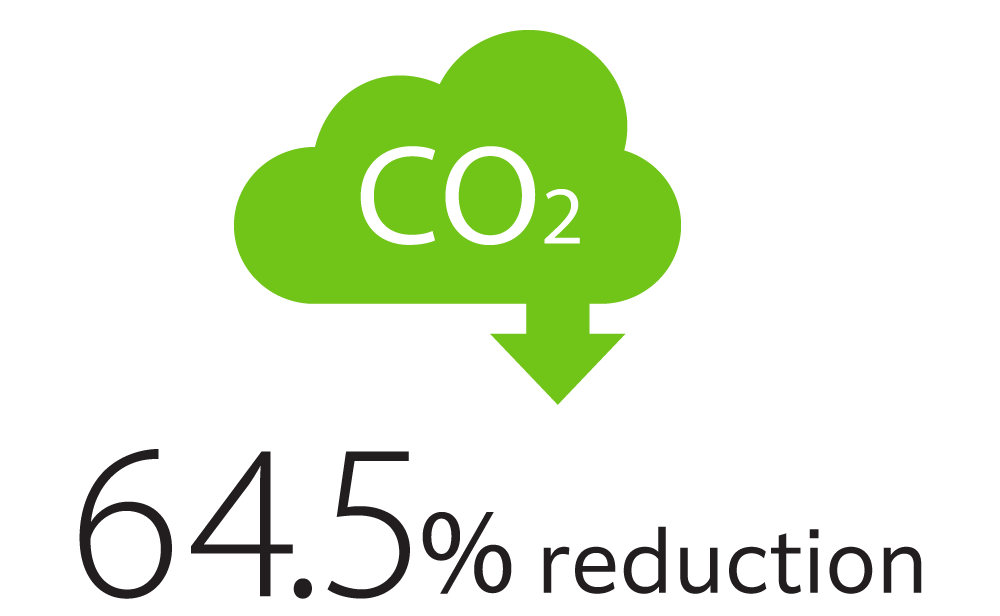
56.0% reduction

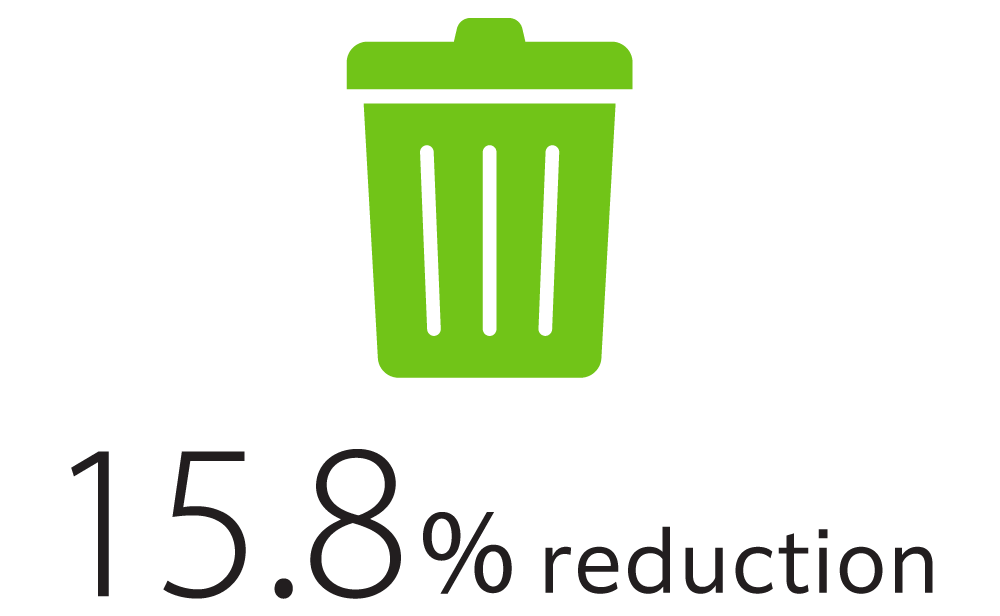
Total Waste Generated from Operations (compared to fiscal year 2018)

Over 16% reduction

Unit Sales of Refurbished Semiconductor Lithography Systems

Total 474 units

Eco-friendly Products

At the Nikon Group, to develop products that fully consider the characteristics of Nikon products and their impact on the environment, we established Nikon's strict product assessment standards in 1955. This assessment evaluates all newly developed products in terms of weight and volume reduction, reduction of hazardous substances, standardization of materials, and recyclability.
Additionally, in fiscal year 2017, we revised the definitions and framework for environmentally friendly products. Since then, we have introduced a system that certifies products that meet stricter standards in the product assessment as Eco-friendly Products or Super Eco-friendly Products.

Eco-friendly Products Framework
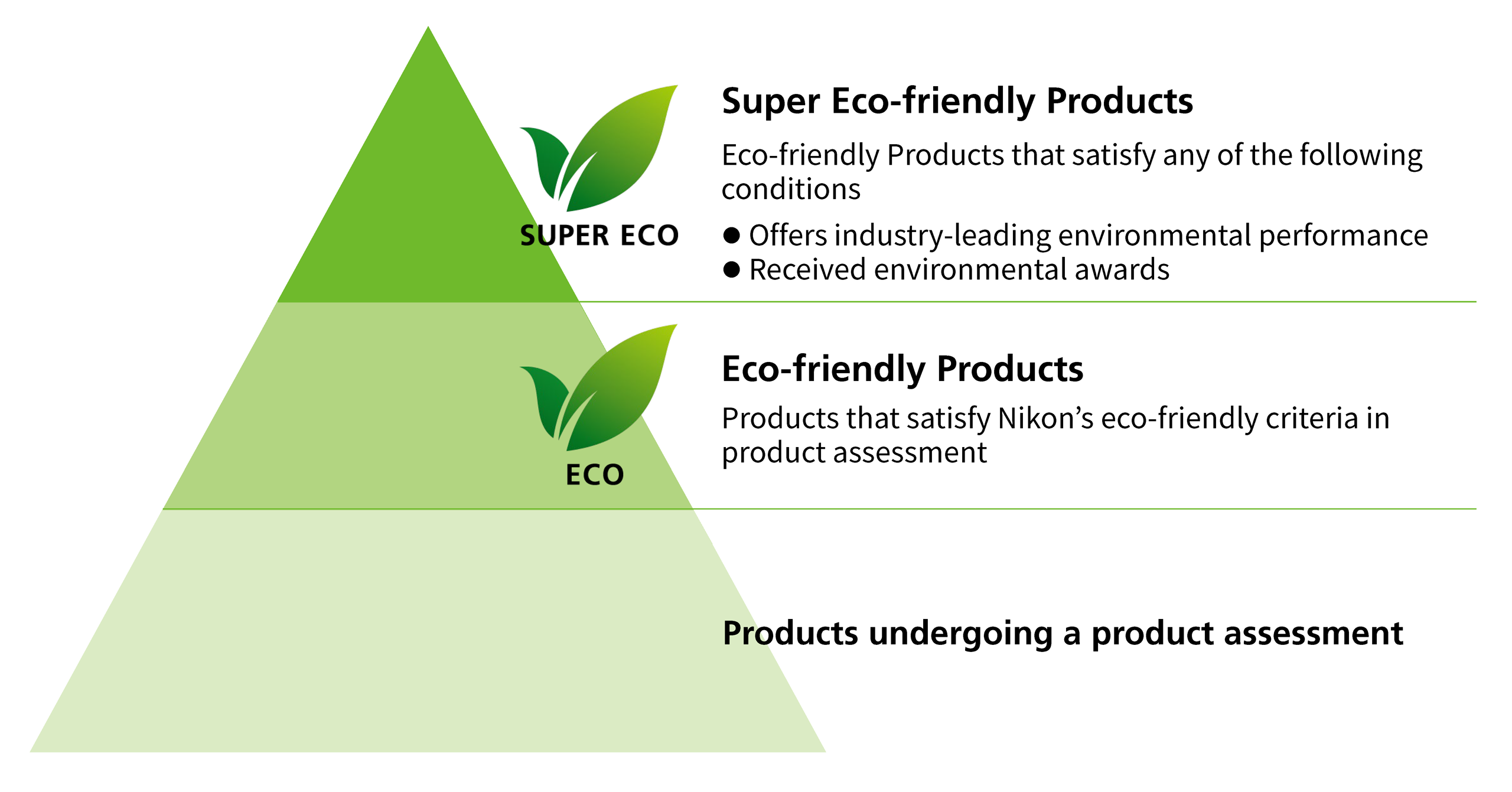
SUPER ECO: Super Eco-friendly Products: Eco-friendly Products that satisfy any of the following conditions ●Offers industry-leading environmental performance ●Received environmental awards / ECO: Eco-friendly Products: Products that satisfy Nikon's eco-friendly criteria in product assessment / Products undergoing a product assessment

Relevant Highlights